
You notice it in small ways first. A shorter fuse than you’d like. A tiredness that sleep doesn’t touch. A flicker of resentment that arrives with its own wave of guilt, because how can you feel worn down by caring for someone you love?
If you recognise that, please hear this early: you’re not failing, and you’re not a bad daughter or son. You’re carrying something heavy, mostly invisibly, often alone. It has a name. It’s caregiver burnout, and it’s one of the most common, least talked-about parts of looking after an aging parent.
There’s an old line that fits here. You can’t pour from an empty cup. It sounds like a fridge magnet until you’re the cup, tipped sideways, wondering where you went. This guide is about the refilling — not as a reward you have to earn, but as the thing that keeps you standing long enough to keep caring at all.
Let’s start where it helps most: understanding what’s actually happening to you, and why it isn’t your fault.
Key Takeaways
- Burnout isn’t weakness, it’s overload. Informal carers in the EU give around 17 hours a week on average, and women make up 52–66% of them (WHO Europe, 2024).
- The load is enormous and mostly unseen: roughly 52 million Europeans provide informal care, about 80% of all long-term care (European Commission, 2022).
- Caregivers who don’t protect themselves neglect their own health first — a genuine risk, since caring is linked to higher rates of depression (2024 study, 19 countries).
- Protecting yourself isn’t selfish. It’s load-bearing. A rested carer helps; an empty one can’t.
What is caregiver burnout, really?
Caregiver burnout is the state of physical, emotional, and mental exhaustion that builds when caring outlasts your reserves. It’s not ordinary tiredness. It’s what happens when the demand stays high for months or years, and your own needs keep sliding to the bottom of the list. The evidence is sobering: a 2024 study of more than 140,000 adults across 19 countries found informal caregivers carry a meaningfully higher risk of depression than non-caregivers (2024 study).
The tricky part is how quietly it arrives. There’s rarely a single dramatic moment. Instead the days compress. The hobbies fall away. The friends stop hearing back. You tell yourself it’s just a busy stretch, and the busy stretch becomes the shape of your life.
Burnout is different from a hard week in one key way: rest stops working. A good night’s sleep or a free Saturday used to reset you. When you’re burnt out, they don’t. You wake up already depleted, already behind, already bracing. That’s the signal to pay attention, long before you push harder.
| A hard stretch | Burnout | |
|---|---|---|
| After rest | You bounce back | You wake up still empty |
| Your mood | Stressed, then it lifts | Flat, numb, or quietly resentful |
| Your world | Narrows for a while | Friends and hobbies quietly disappear |
| The fix | Time and a breather | Sharing the load and real support |
Why does caring for a parent burn you out?
Because the work is large, relentless, and largely invisible, and you’re probably carrying more of it than you realise. As of 2024, women make up between 52% and 66% of all informal carers across the EU and give around 17 hours a week — the equivalent of a substantial part-time job layered on top of everything else (WHO Europe, 2024). And that’s the average. Many give far more.
Zoom out and the scale is staggering. In 2022, the European Commission estimated that around 52 million Europeans provide informal long-term care, accounting for close to 80% of all long-term care delivered across the EU (European Commission, 2022). Put plainly: families, not institutions, do the vast majority of caring. In Poland alone, roughly 4 million people care for a relative (Eurocarers).
Now add the part no statistic captures: the mental load. It isn’t just the hours you spend. It’s the pharmacy you’re tracking in your head, the appointment you mustn’t forget, the low background question that never fully switches off — is she okay right now? You can be sitting at your own dinner table and still be half on duty. That invisible second shift is where a lot of burnout actually lives.
Worth noticing: the exhaustion that flattens caregivers usually isn’t the visible tasks. Those you can see and plan. It’s the worry that never clocks off — the hum of holding someone else’s wellbeing in your mind, every hour, unpaid and unseen. Naming that is the first relief.
There’s a structural trap here too. Distance and love conspire to make you the single hub — every update, every decision, every worry routed through you alone. If that sounds familiar, our long-distance caregiver’s guide unpacks how to share the load so you’re not the only point of failure.
Spot the warning signs early
The signs show up in your body, your mood, and your behaviour, often before you’d ever use the word “burnout.” Catching them early matters, because burnout is far easier to ease at the grumbling stage than at the collapse stage. Across research and caregiver accounts, a consistent cluster appears — and you don’t need all of them for it to count.
Watch for these in yourself:
- Physical: exhaustion that sleep won’t fix, frequent colds or headaches, changes in appetite, trouble sleeping even when you’re shattered.
- Emotional: irritability, a short fuse, numbness, sadness, or resentment followed by guilt for feeling it.
- Behavioural: pulling away from friends, dropping the things you used to enjoy, relying more on wine or takeaways to get through, snapping at the person you’re caring for.
- Mental: trouble concentrating, a sense of hopelessness, or feeling that nothing you do is ever enough.
Here’s the honest part. Resentment doesn’t make you cruel, and exhaustion doesn’t make you ungrateful. Both are symptoms of a load that’s too big for one person — not verdicts on your character. If you’ve been quietly scoring yourself as a bad son or daughter, put the scorecard down. That guilt is a burnout symptom too, and it helps no one, least of all your parent.
You can’t pour from an empty cup: why your wellbeing is load-bearing
Because when caregivers run dry, the first thing they cut is their own care — and that’s exactly the wrong economy. In the US, a 2023 AP-NORC poll found that because of caregiving duties, 35% of family caregivers had skipped their own routine health care, 33% had skipped a recommended treatment, and 31% hadn’t gone to the doctor when they were sick or injured (AP-NORC, 2023). You keep everyone’s appointments but your own.
The flight-safety line is a cliché because it’s true. You fit your own oxygen mask first, not because you matter more than the person beside you, but because you’re no use to them unconscious. Caregiving works the same way. Your wellbeing isn’t the indulgence you get to after the “real” caring. It is part of the real caring — the part that determines whether you can still be here, steady and kind, in a year’s time.
And the stakes are measurable. Drawing on the pan-European Social Survey, a 2025 analysis of nearly 24,000 informal carers found that the more intensive the caring, the higher the risk of depression (Innovation in Aging, 2025). Protecting your own reserves isn’t going soft. It’s the difference between sustainable care and a carer who eventually needs caring for.
Protect yourself without abandoning them
Protecting yourself comes down to a few deliberate limits and a shared load. This isn’t about caring less; it’s about caring in a way you can keep up for years, not weeks. You don’t need a dramatic life overhaul. You need a handful of small, repeatable protections that keep a little of you for you. Start with these.
- Define what “enough” is, out loud. You cannot do everything, and trying to is the fast road to burnout. Decide what care you can give reliably, and let that genuinely be enough. Set the bar where you can actually hold it.
- Share the load before you’re forced to. Name the roles honestly — who’s the nearby hands, who handles money, who’s the medical contact. If siblings are involved, split it explicitly rather than letting it all default to you.
- Protect a few hours that are only yours. A walk, a friend, a class, an hour with a book. Treat it as fuel you need to keep going, and put it in the calendar like any other appointment.
- Lighten the mental load, not just the tasks. Much of the exhaustion is the tracking. Anything that lets you stop holding a worry in your head — a shared family checklist, a sibling who calls on the days you can’t, a pill organizer, or a simple app that quietly confirms a dose was taken — hands a little of that weight back. (More on those options in our honest pill organizer vs reminder app comparison.)
- Say the guilt out loud. To a sibling, a friend, a support group, a GP. Guilt shrinks fast the moment it stops being a secret. Almost every caregiver feels it; almost none of them say it.
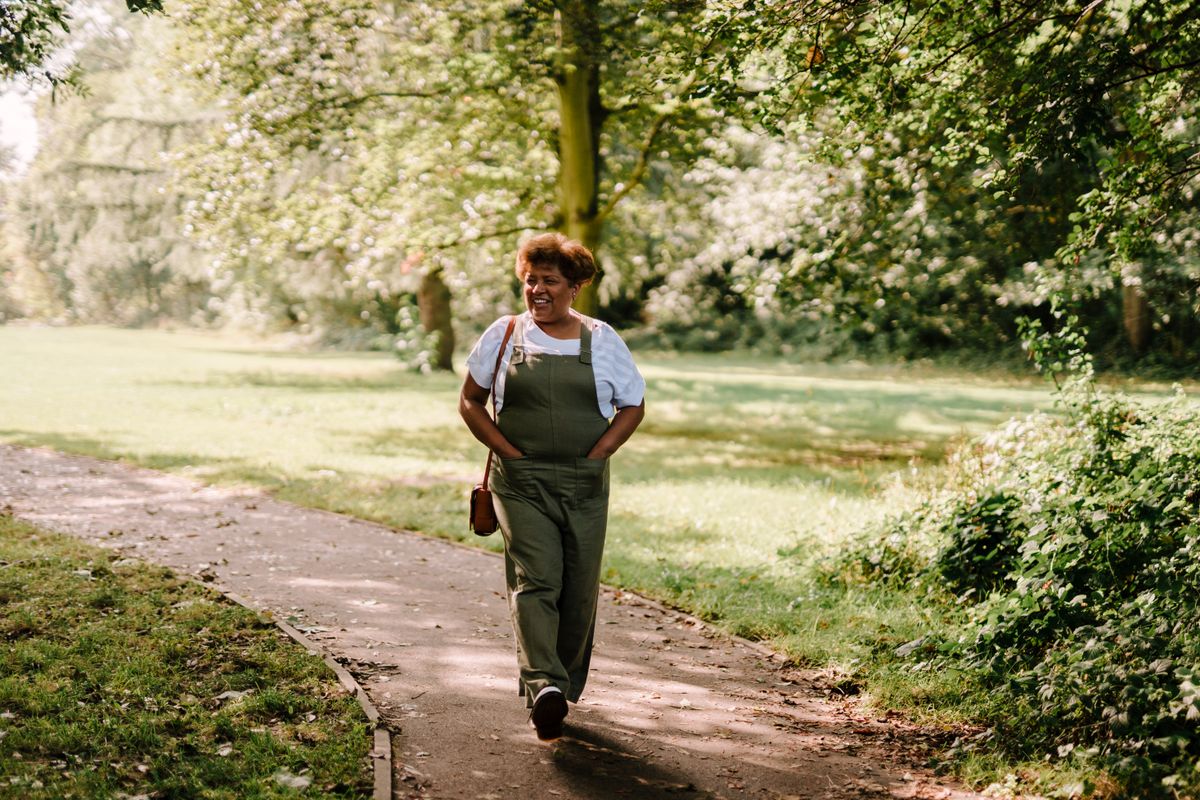
Notice that none of these ask you to love your parent less. They ask you to stop routing every ounce of that love through worry and self-erasure. Helping your parent keep their independence, rather than taking over, protects you both — a theme we go deeper on in how to help without hovering. The goal isn’t a smaller heart. It’s a heart that can keep going.
When should you ask for more help?
When the strategies above aren’t touching it, or when the low mood, hopelessness, or exhaustion has settled in and stayed. That’s not a failure — it’s information. Burnout that doesn’t lift with rest and boundaries is a sign the load genuinely exceeds what one person can carry, and that deserves real support, not more willpower.
Reach outward when you notice any of these: you feel persistently hopeless or trapped; you’re using alcohol or food to cope; you’re withdrawing from everyone; or you’ve had thoughts that your parent, or you, would be better off without the situation. Those last thoughts are more common than caregivers admit, and they’re a clear signal to reach for support, never a mark of shame. If they feel urgent, you don’t have to wait for an appointment: anywhere in the EU you can call 112 at any hour, and most countries run a free, confidential emotional-support line you can reach today.
Practical places to turn: your GP (name the word “burnout” plainly), a local carers’ support group, respite care that gives you a genuine break, and national carer organisations. In Poland and across the EU, groups like Eurocarers and national member bodies point to local support. You don’t have to reach crisis to deserve help. There’s real strength in reaching for it early.
Frequently Asked Questions
What are the first signs of caregiver burnout?
The earliest signs are usually exhaustion that rest won’t fix, a shorter temper, and pulling back from friends and hobbies. Emotional numbness, resentment, and guilt often follow. Because caring is linked to higher depression risk (2024 study, 19 countries), catching these early — at the grumbling stage, not collapse — matters most.
Is it normal to feel resentful of a parent I’m caring for?
Yes, and it doesn’t make you a bad person. Resentment is a symptom of an overwhelming load, not a verdict on your character. Caregivers give around 17 hours a week on average in the EU, often invisibly (WHO Europe, 2024). Feeling worn down by that much is human, not ungrateful.
How can I look after myself while caring for an aging parent?
Set a few firm limits: define what “enough” care is, protect some hours that are only yours, share roles with family, and offload the mental tracking where you can. It matters — many caregivers skip their own health care, with over a third going without routine care in one US survey (AP-NORC, 2023).
When should a caregiver seek professional help?
When boundaries and rest aren’t easing the exhaustion, or when hopelessness, heavy drinking, withdrawal, or dark thoughts appear. Those are signals to speak to your GP plainly and look into respite care or a carers’ group. Caregiving intensity is linked to higher depression risk (Innovation in Aging, 2025), so asking early is wise, not weak.
Does caregiver burnout affect the person being cared for?
It can. A depleted carer has less patience and presence, and burnout is linked to poorer care and higher risk of the caregiver’s own illness. Protecting your wellbeing is part of caring well, not separate from it. That’s why sharing the load and using simple support tools benefits both of you.
The kind version of the truth
Here’s what this whole guide comes down to. Caring for someone you love should not cost you yourself, and when it starts to, that’s a problem to solve, not a flaw to hide. You are one of tens of millions doing this quietly — around 52 million across Europe (European Commission, 2022) — and almost none of you were given a manual or a break.
So refill the cup, deliberately and without apology. Name what “enough” is. Share the load. Keep an hour that’s yours. Say the guilt out loud. And offload the small, grinding worries wherever you can, so more of your energy goes to the parts of caring that actually feed you both.
If the worry you’d most like to set down is the medication one — the endless did they take it today? — that’s the specific weight Carely is built to lift, with calm reminders for them and quiet confirmation for you, so one background question can finally go quiet. The person you care for can use it free, with no account. But whatever tools you choose, choose yourself back into the picture too. An empty cup helps no one. A cared-for carer changes everything.
Sources
- World Health Organization Regional Office for Europe, Shining light on women’s contributions: celebrating their role in informal care, 8 March 2024. Retrieved 2026-07-30. https://www.who.int/europe/news-room/08-03-2024-shining-light-on-women-s-contributions--celebrating-their-role-in-informal-care
- European Commission, Council Recommendation on access to affordable high-quality long-term care (European Care Strategy), COM(2022) 441, 2022, citing Van der Ende et al., 2021. Retrieved 2026-07-30. https://eur-lex.europa.eu/legal-content/EN/TXT/HTML/?uri=CELEX:52022DC0441
- Depression Among Middle-Aged and Older Informal Caregivers in 19 Countries, 2024. Retrieved 2026-07-30. https://pmc.ncbi.nlm.nih.gov/articles/PMC11690842/
- Caregiving Intensity and Depression Among Informal Caregivers (analysis of the European Social Survey, ~23,799 carers), Innovation in Aging, 2025. Retrieved 2026-07-30. https://pmc.ncbi.nlm.nih.gov/articles/PMC12760722/
- AP-NORC Center for Public Affairs Research, Many Caregivers Neglecting Their Own Health, 2023 (US data). Retrieved 2026-07-30. https://www.longtermcarepoll.org/ap-norc-poll-many-caregivers-neglecting-their-own-health/
- Eurocarers, Poland — Country profile. Retrieved 2026-07-30. https://eurocarers.org/country-profiles/poland/
- Eurocarers, About carers and support directory. Retrieved 2026-07-30. https://eurocarers.org/